
Notes
Quick thoughts, links, and pictures. RSS


I’ve published my translation of the Bible. It’s a work in progress.
bible.rschapman.com
The New Testament
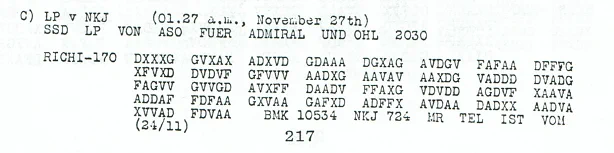
AI is unlocking the past. There is and will continue to be a steady stream of discoveries from simply letting AI loose on the many unstudied historical puzzles and records of the past. We live in truly exciting times.

vals.ai
Vals AI
Private, domain-specific benchmarks in legal, tax, and finance.

I was 18yo, a freshman studying engineering. I woke up later than usual for my morning class and rushed to get there before being late.
As I hustled across the large open parking lot between my dorm and the building my classroom was in, I saw a classmate walking back to the dorm. He started yelling. As I approached, I heard him say, “They just blew it up!” I had no idea what he was talking about. “Blew up what?” I asked. “The twin towers! They just f*&$ing blew it up!”
I kept walking to class and walked in to see a mostly empty room with a few students huddled around a TV watching the news. That’s when I learned what my classmate had been going on about. The first plane had just hit the first tower in New York. I would continue to watch the news that day and watch the carnage unfold.
I emailed my uncle, who was in the military at the time, to ask him what he knew. He was in intelligence. I remember him writing back and telling me that war was coming and to pray.
I went to the Christian student center at the church I was attending. I spent the day with friends talking about how this would change things. In a lot of ways, this was the end of my childhood. It was the end of the time between the Cold War and the wars against terror. The US was a hegemon in peace alone but for a short time.
As I hustled across the large open parking lot between my dorm and the building my classroom was in, I saw a classmate walking back to the dorm. He started yelling. As I approached, I heard him say, “They just blew it up!” I had no idea what he was talking about. “Blew up what?” I asked. “The twin towers! They just f*&$ing blew it up!”
I kept walking to class and walked in to see a mostly empty room with a few students huddled around a TV watching the news. That’s when I learned what my classmate had been going on about. The first plane had just hit the first tower in New York. I would continue to watch the news that day and watch the carnage unfold.
I emailed my uncle, who was in the military at the time, to ask him what he knew. He was in intelligence. I remember him writing back and telling me that war was coming and to pray.
I went to the Christian student center at the church I was attending. I spent the day with friends talking about how this would change things. In a lot of ways, this was the end of my childhood. It was the end of the time between the Cold War and the wars against terror. The US was a hegemon in peace alone but for a short time.
Image set1 image · open to inspect
The smartest people I know are unafraid to ask questions and appear ignorant. Sort-of-smart people stop too quickly when they hit roadblocks.
I see this often in my line of work. Someone will do a trial of our product and, instead of asking questions, will white-knuckle reading the documentation, and when they get stuck, assume it can't be done and quit. It drives me insane.
I should say there are tiers to practical intelligence, and this band drives me nuts the most. These are usually people that are just smart enough to do something kind of technical. They also are just smart enough that they start to think of everyone around them as not particularly smart and behave condescendingly. They're not quite smart enough, though, to know how to work around these roadblocks.
I was on a call recently where we were getting feedback on how we did compared to other players in the market, and they dinged us for something we did. It required a small configuration change that wasn't obvious to them as people unfamiliar with the product. So they simply said we couldn't do it. I immediately turned it up, shared my screen, and said, "We can absolutely do it! It's right here!" Crickets. Problem solved, but this kind of interaction was constant.
Be smart. Ask more questions. Definitely ask questions when you've hit a roadblock on a problem.
I see this often in my line of work. Someone will do a trial of our product and, instead of asking questions, will white-knuckle reading the documentation, and when they get stuck, assume it can't be done and quit. It drives me insane.
I should say there are tiers to practical intelligence, and this band drives me nuts the most. These are usually people that are just smart enough to do something kind of technical. They also are just smart enough that they start to think of everyone around them as not particularly smart and behave condescendingly. They're not quite smart enough, though, to know how to work around these roadblocks.
I was on a call recently where we were getting feedback on how we did compared to other players in the market, and they dinged us for something we did. It required a small configuration change that wasn't obvious to them as people unfamiliar with the product. So they simply said we couldn't do it. I immediately turned it up, shared my screen, and said, "We can absolutely do it! It's right here!" Crickets. Problem solved, but this kind of interaction was constant.
Be smart. Ask more questions. Definitely ask questions when you've hit a roadblock on a problem.
Image set1 image · open to inspect
The hardest part of any great books program is simply reading the great books. That sounds obvious, maybe, but it's extraordinarily challenging to read these works if you're not used to their styles.
I have made some progress on the classics and have been encouraging my son to do them using graphic novels as a soft introduction to them.
Discussion and lecture are important here, but I honestly think a good dialog with a frontier LLM would give you 85% of what's useful from those engagements.
I have made some progress on the classics and have been encouraging my son to do them using graphic novels as a soft introduction to them.
Discussion and lecture are important here, but I honestly think a good dialog with a frontier LLM would give you 85% of what's useful from those engagements.

graham.uchicago.edu
Basic Program of Liberal Education for Adults
Read and discuss a collection of the finest works of literature, philosophy, history, and social thought ever written.
I buy items off my son's teachers' wishlist each year to hopefully bribe them into treating my son well throughout the year.
Don't get me wrong, I want to help them out, make sure the class has all the goodies they need, and ensure they aren't lacking for educational materials, but I also drop a few hundred bucks each year, hoping that it will earn a little grace each year.
I don't know how much it helps, and bribes are fleeting, but there seems to be enough evidence that if you do something nice for folks, they will return the favor. It doesn't always work, and we've had our usual share of good and challenging teacher interactions. It's also not something I can easily A/B test, but it's my hope that, in the same way a utility just tends to work, in the background the investment is paying dividends.
Don't get me wrong, I want to help them out, make sure the class has all the goodies they need, and ensure they aren't lacking for educational materials, but I also drop a few hundred bucks each year, hoping that it will earn a little grace each year.
I don't know how much it helps, and bribes are fleeting, but there seems to be enough evidence that if you do something nice for folks, they will return the favor. It doesn't always work, and we've had our usual share of good and challenging teacher interactions. It's also not something I can easily A/B test, but it's my hope that, in the same way a utility just tends to work, in the background the investment is paying dividends.
Image set1 image · open to inspect